


Connecting Ecological Corridors: The Story Behind FUNDEMA-PP and the Potreros de Puax Nature Reserve

Updated: 2 hours ago
When you hear the acronym FUNDEMA-PP, you’re dealing with an initiative deeply rooted in local history and biodiversity conservation. It stands for Foundation for Ecological and Environmental Development of Potreros de Puax. As a biologist and president of this organization, my mission and commitment at the helm of FUNDEMA-PP is to protect a vital ecological corridor in the Western Central Valley before it’s too late.
A Look at History: Where Does “Puax” Come From?
The term Potreros de Puax first appeared in records in 1663. During the colonial era, it was used to refer to a vast region “on the other side of the Puax River” that encompasses the present-day cantons of Grecia, Poás, Sarchí, Naranjo, and Zarcero.
Pre-Columbian origins: Long before the colonial era, these lands were inhabited by the Boto indigenous people, who were part of the Western Huetar Kingdom.
The origin of the name: The leading theory suggests that Puax derives from the name of an indigenous chieftain who ruled this territory in the mid-16th century. Historians also note that the word evolved into “Poás” due to the presence of wild plants with thorns or spines (such as bromeliads) and grasses characteristic of the colonial grasslands.
A strategic location: Following the opening of the route for mule-driven trade to the Panama Fairs, the entrance to this region, located in what is now Tacares (particularly Hacienda Pinto and Hacienda La Argentina), became a key area for rest and transit.
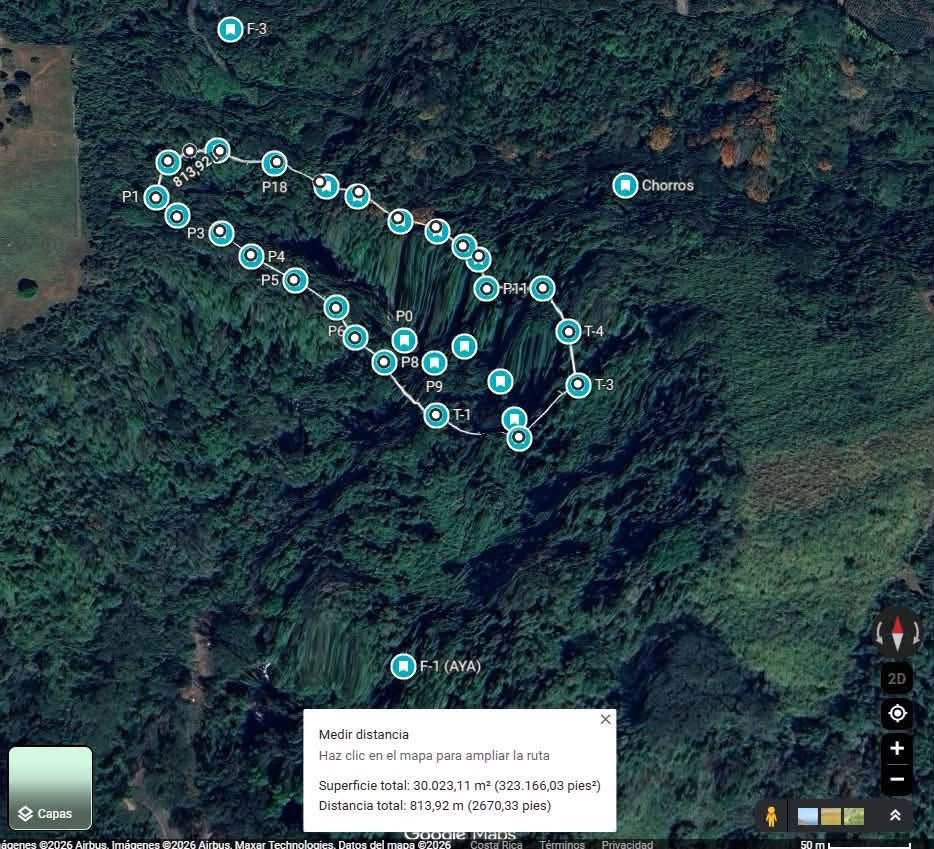
Today, that same historic entrance is flanked by the deep canyons of the Rosales, Poás, San Ramón, and Colorado rivers, which continue to serve as indispensable natural corridors for local wildlife.
Debunking the “green desert” myth
For a long time, it was believed that the sugarcane fields in the area were “green deserts” devoid of wildlife. However, through camera trap studies we conducted in collaboration with the Greek Primate Group (an organization affiliated with our foundation), we demonstrated the exact opposite.
These agroecosystems harbor surprising biodiversity:
Mammals and predators: Pumas, jaguarundis, tolomucos, pizotes, raccoons, badgers, and honey bears.
Arboreal fauna: Congo monkeys and white-faced monkeys in forest patches and along riverbanks.
Birds: More than 100 species identified (about 10% of the country’s avifauna), including the black guan and the sunbird.
The Challenge: Industrial Development vs. Biological Corridors
Our region is facing rapid changes in land use, transforming sugarcane fields into free trade zones and industrial parks. While I recognize that this boosts the local economy, perimeter fences and construction create physical barriers. This habitat fragmentation limits animals’ movement across Route 1 (Bernardo Soto Highway) and jeopardizes their vital activities.
My Proposal: Potreros de Puax Nature Reserve
To counteract habitat loss, FUNDEMA-PP proposes the creation of the Potreros de Puax Nature Reserve, a private reserve project that seeks to balance conservation with corporate social and environmental responsibility.
The main areas we are focusing on are:
Ecological connectivity: Design and implement wildlife crossings (overhead, underground, and at-grade) and biological corridors to maintain the genetic flow of species.
Partnerships with the private sector: Actively collaborate with developers in the area (such as Green Valley and Evolution) to integrate sustainability into industrial growth.
Environmental education and ecotourism: Creating low-impact infrastructure, such as trails and observation decks, along with an interpretation center for the community and visitors.
Environmental restoration: Continuously monitoring wildlife and reforesting degraded areas.
Be part of the change with us!
Protecting the home of pumas, monkeys, and dozens of other species in the Central Valley is a cause where you and your company can make a real difference. How would you like to get involved today?
Become a donor: Directly support the purchase of more camera traps, the planting of native trees, and the construction of wildlife crossings.
Explore our calendar of activities: Check out upcoming guided hikes, environmental education workshops, and reforestation events open to the community.
Schedule a session with my team and me: Schedule a call with us to discover how your company can partner with FUNDEMA-PP, meet its Corporate Social Responsibility (CSR) goals, or organize an unforgettable team-building and corporate volunteer day for your staff.
Contact us today and help us create a green corridor for current and future generations!



Comments